I bring MIDI orchestration to life through realistic virtual performances and detailed production. From expressive baritone saxophones to powerful cinematic drums and percussion, I focus on achieving studio-quality realism and human feel.
I’m a composer, orchestrator, and producer specializing in realistic orchestral mockups, cinematic production, and hybrid scoring.
My work focuses on bringing virtual performances to life with realism, depth, and emotional impact. Whether it’s orchestral arrangements, cinematic sound design, detailed MIDI programming, or powerful drums and percussion, I aim for productions that feel organic, dynamic, and ready for professional use.
I work across multiple genres including cinematic, orchestral, trailer music, EDM, metal, ambient, and experimental productions.
Services include:
• Orchestral mockups & virtual orchestration
• Hybrid cinematic scoring
• MIDI programming & humanization
• Drums & percussion writing
• Sound design & atmospheric textures
• Mixing & mastering
I pay close attention to realism and musical detail, from expressive articulations and natural dynamics to layered percussion and spatial depth. My goal is not simply to program MIDI, but to create performances that sound alive.
Whether you need a fully produced score, additional orchestration, realistic virtual instruments, or cinematic production support, I’m always interested in building something unique and impactful.
Click the 'Contact' above to get in touch. Looking forward to hearing from you.
Interview with Auris Music
Q: Tell us about a project you worked on you are especially proud of and why. What was your role?
A: I composed and submitted a piece for a study exploring the effects of music on mental health. What made the project especially meaningful was learning afterward that the music had a positive impact on at least one patient. Knowing that my work contributed to someone's well-being remains one of the most rewarding experiences of my career.
Q: What are you working on at the moment?
A: 1. A classical symphony in its final stages of development. 2. New electronic and hybrid music productions, including remix and sound design projects that help me explore new techniques and genres.
Q: Analog or digital and why?
A: Digital. For me, the priority is the final result. Modern digital tools provide the transparency, precision, and flexibility needed to achieve professional mixes while ensuring projects remain efficient, consistent, and easy to revise when needed.
Q: What's your 'promise' to your clients?
A: My promise is to deliver the highest level of realism, musicality, and attention to detail possible while maintaining clear communication and reliable delivery throughout the project.
Q: What do you like most about your job?
A: Creating the illusion of reality. I enjoy making virtual instruments behave like real musicians, capturing the expression, nuance, and emotion that make a performance feel alive.
Q: What questions do customers most commonly ask you? What's your answer?
A: Common questions include: • How long will the project take? Answer: After reviewing the score or materials, I provide an estimated delivery time, usually within a few hours. • Can you make it darker, brighter, more dynamic, or more cinematic? Answer: Absolutely. Shaping the character and emotional impact of a performance is part of the process. • Can you create realistic solo instruments as well as full orchestras? Answer: Yes. The same realism-focused approach applies to both solo instruments and large ensembles.
Q: What's the biggest misconception about what you do?
A: Many people assume virtual orchestras cannot achieve the realism and emotional impact of live musicians. While live orchestras remain the gold standard, modern virtual instruments and detailed programming can produce results that are remarkably convincing and highly effective for professional productions.
Q: What questions do you ask prospective clients?
A: I ask clients for examples of recordings, performances, or composers whose sound they admire. This helps me understand their artistic vision and align the production with their expectations.
Q: What was your career path? How long have you been doing this?
A: I originally set out to become a mixing engineer, but after struggling to find clients, I shifted my focus toward composition. When a family member needed music for a short film, I began studying film scoring and developed a deep interest in music theory, orchestration, and cinematic writing. That journey eventually led me into classical composition, orchestral music, and remix production. While participating in remix competitions, I occasionally received feedback praising my use of "real instruments." What made those comments memorable was that the performances were created entirely with virtual instruments. Realizing that experienced listeners sometimes assumed they were hearing live recordings sparked a deeper interest in realism and expressive programming. Since then, I have focused on refining that craft, combining composition, production, and detailed MIDI programming to create realistic orchestral mockups and virtual performances that feel natural, expressive, and convincing.
Q: How would you describe your style?
A: Detailed, expressive, and dynamic. I focus on realism, emotional impact, and musical storytelling while maintaining a disciplined and professional production workflow.
Q: Which artist would you like to work with and why?
A: Adele. Her music combines strong songwriting, emotional depth, and exceptional vocal performances. I would enjoy contributing orchestral and cinematic elements that complement her style.
Q: Can you share one music production tip?
A: Don't rely on the humanize button. Realism comes from understanding how musicians actually perform, then shaping timing, dynamics, phrasing, and articulation with intention.
Q: What type of music do you usually work on?
A: Primarily orchestral, cinematic, and hybrid music. I also work on classical compositions, trailer music, game music, EDM, and projects that combine electronic and acoustic elements.
Q: What's your strongest skill?
A: Orchestral realism. Over the years I have developed techniques for making virtual instruments behave and perform like real musicians, resulting in expressive and convincing mockups that communicate the emotion and detail of a live orchestra.
Q: What do you bring to a song?
A: I bring realism, clarity, and musicality. Whether I'm working with orchestral instruments, vocals, or a full mix, my goal is to make performances feel natural, expressive, and emotionally engaging.
Q: Tell us about your studio setup.
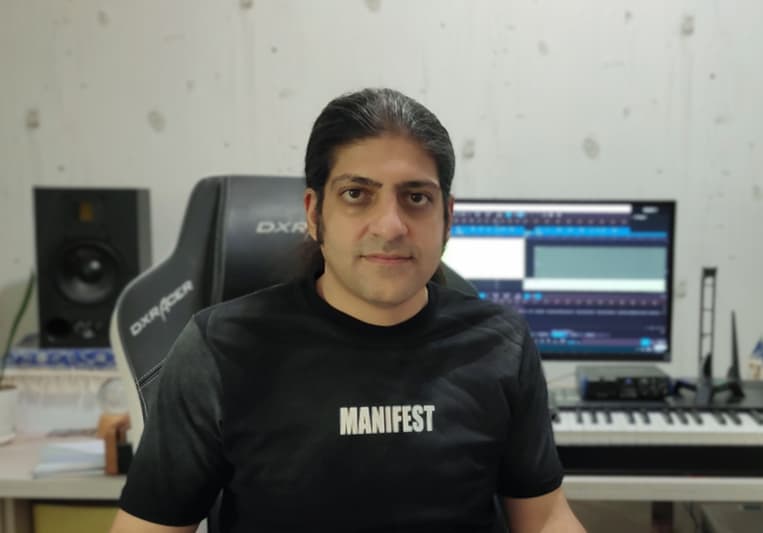
A: My studio is centered around a powerful production workstation, an Arturia KeyLab 88 controller, professional audio interfaces, extensive virtual instrument collections, and a pair of Adam A7X monitors. I also use multiple pairs of headphones for mixing, referencing, and quality control across different listening environments.
Q: What other musicians or music production professionals inspire you?
A: •Andrew Scheps •Bob Rock •Chris Lord-Alge •Johnathan Moffett
Q: Describe the most common type of work you do for your clients.
A: Transforming scores, MIDI files, and musical concepts into detailed orchestral mockups that capture the realism, emotion, and impact of a live ensemble.
Q: Is there anyone on SoundBetter you know and would recommend to your clients?
A: No.
Q: What advice do you have for a customer looking to hire a provider like you?
A: Request samples and conduct a blind test to determine which work best meets your criteria.
Q: If you were on a desert island and could take just 5 pieces of gear, what would they be?
A: After getting survival gear: 1 - A solar generator. 2 - A UPS 3 - My laptop 4 - My sound card 5 - My Audio Technica headphones
Q: What's your typical work process?
A: 1- Assessing specific client requests or special requirements. 2 - Executing the project setup and organizing all files, both on the hard drive and within the DAW. 3 - Identifying sections that need extra attention, such as solos in a mockup or glitches in vocal recordings (clicks, pops, etc.). 4 - Commencing the main production work.

I was the Virtual Orchestra, Mixing engineer, Mastering Engineer in this production
- Vocal TuningAverage price - $30 per track
- Vocal compingAverage price - $40 per track
- Programmed drumAverage price - $100 per song
- Sound DesignAverage price - $500 per minute
- Mixing EngineerAverage price - $50 per song
- Mastering EngineerAverage price - $30 per song
Reasonable revisions are included. Changes to project scope, arrangement, or instrumentation may require additional time and cost. Communication is key.
- ADAM Audio A7X monitors
- Arturia keylab 88
- Studio One Pro
- Cubase
- Ableton Live
- Kontakt
- professional orchestral and cinematic sample libraries
- hybrid scoring and advanced MIDI programming workflow.

- Special Mixing & Mastering DiscountJun 05, 2026
To celebrate the launch of my SoundBetter profile, I'm offering a limited-time discount on Mixing & Mastering services.
Whether you're working on a single, an EP, or a larger project, I'll help bring clarity, balance, and impact to your music while preserving its artistic vision.
Feel free to get in touch with your project details. I'd love to hear what you're working on.
– Auris