Hybrid mixing & mastering for records that hit deeper, sound clearer, and stay true to the artist’s identity.
I’m a Seoul-based mixing and mastering engineer working across pop, indie, rock, classical, and computer-based music. My goal is simple: to help songs communicate more clearly, hit more deeply, and keep the identity that made them special in the first place.
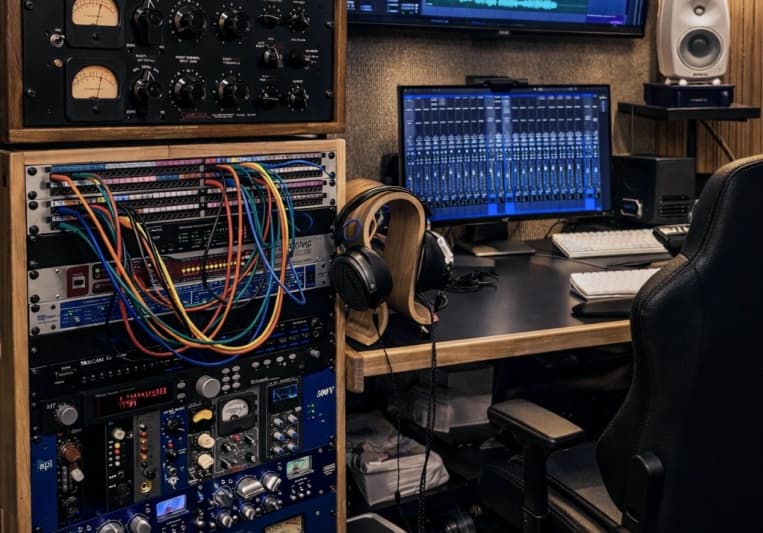
I work with a hybrid analog-digital setup that combines character, precision, and flexibility. I love what analog can bring in terms of tone, saturation, and movement, and I rely on digital tools for the detail and control needed to finish a record at a high level.
Whether I’m working on a band-driven track, a more electronic production, or something more spacious and cinematic, I focus on preserving the emotional core of the song while shaping it into something polished, beautiful, and release-ready. I also offer vocal tuning, comping, editing, and detailed session cleanup when needed.
If you already know what your song means to you, my job is to make sure that meaning reaches the listener clearly and powerfully.
Tell me about your project and how I can help, through the 'Contact' button above.
Languages
- English
- Japanese
- Korean
Interview with Cleanchard
Q: Tell us about a project you worked on you are especially proud of and why. What was your role?
A: One project I’m especially proud of is a Catholic piece called Kyrie by the Sisters of the Sacred Heart of Mary of Mirinae. It’s hard to choose just one project, but this one stays with me because it was such a unique experience: I went on location into a cloistered Catholic space, recorded 120 nuns and organ live, and then brought it home to mix. My role covered both the location recording and the mix, and I’m proud of it because it was not only technically challenging, but also a rare and moving experience that resulted in a beautiful final record.
Q: What are you working on at the moment?
A: At the moment, I’m balancing several parts of my work at once. I’m currently studying in graduate school, actively playing in a band, teaching audio to students at an arts high school, and continuing to work on location recording and mixing projects. All of those experiences keep me connected to music from different angles, and they continue to shape the way I listen, think, and work.
Q: Is there anyone on SoundBetter you know and would recommend to your clients?
A: I’m always open to recommending the right person when a project needs something outside my lane, but I take that seriously and only do it when I genuinely trust their work. For me, a recommendation should always be based on real confidence in both the person and the fit for the project.
Q: Analog or digital and why?
A: Both. I love analog for the saturation, tone, and the sense of movement it can create—there’s something alive and organic about it that’s hard to replace. But digital is just as important to me because it gives me the precision, flexibility, and detail that analog can’t always provide. For me, the best results usually come from using both in a way that lets each one do what it does best.
Q: What's your 'promise' to your clients?
A: My promise to every client is to give them the highest level of satisfaction I can—both in the final result and in the experience of getting there. I want every project to feel like it was handled with care, clarity, and real commitment from beginning to end.
Q: What do you like most about your job?
A: What I love most about this job is the moment when a song starts to feel fully alive. I enjoy helping artists bring their intention into clearer focus and creating something that feels emotionally true, beautiful, and deeply connected to the listener.
Q: What questions do customers most commonly ask you? What's your answer?
A: One of the most common questions I get is, “Does that kind of information really help?” I ask a lot about what the song means to the artist, what emotional direction they want, and how they want it to feel to the listener. My answer is always yes—those details help me understand the heart of the song, so I can make decisions that support its meaning, emotion, and identity more clearly.
Q: What's the biggest misconception about what you do?
A: The biggest misconception is that this work is just about making things sound cleaner or more polished. In reality, a big part of what I do is helping a song communicate more clearly—emotionally, sonically, and artistically—without losing what made it special in the first place.
Q: What questions do you ask prospective clients?
A: I usually ask about the client’s vision, references, and what they want the track to communicate emotionally. I also want to know what they like about the current version, what they want help with, and what kind of final sound they’re aiming for. That gives me a clear starting point and helps us move in the same direction from the beginning.
Q: What advice do you have for a customer looking to hire a provider like you?
A: Look for someone who understands both the sound and the intention behind your music. Clear communication, strong references, and shared trust usually matter more than anything else.
Q: If you were on a desert island and could take just 5 pieces of gear, what would they be?
A: I’d probably take my 670, Bricasti M7, Mac Studio, Antelope Amari, and Audeze MM-500s. That gives me character, space, a solid production center, reliable conversion, and monitoring I can trust—pretty much everything I’d need to stay inspired and keep making serious decisions, even on a desert island.
Q: What was your career path? How long have you been doing this?
A: I started as a bass player and have been immersed in music since I was 14. That foundation eventually led me into recording, mixing, and production, where I developed a deep interest in both the emotional and technical side of sound. I’ve been building this path for years through hands-on studio experience and continuous study.
Q: How would you describe your style?
A: I’d describe my style as emotionally direct, detail-oriented, and centered around intuitive beauty. I believe that even the deepest artistic ideas can lose their impact if the music doesn’t immediately move the listener, so I focus on helping songs communicate the artist’s intention in a way that feels both meaningful and instinctively beautiful.
Q: Which artist would you like to work with and why?
A: I’d love to work with The 1975 because I really admire how they combine strong songwriting with bold, detailed production. Their music feels emotional, stylish, and sonically distinctive, and I’m always inspired by records that balance atmosphere, clarity, and identity so well.
Q: Can you share one music production tip?
A: A great production tip is to make decisions based on what the song needs, not just what sounds impressive on its own. The best productions usually come from choices that support the emotion, arrangement, and identity of the track.
Q: What type of music do you usually work on?
A: I work on a wide variety of music, from pop, rock, indie, and alternative to classical and computer-based productions. I’m not limited to one genre—I care more about understanding what each song needs and doing everything I can to bring it to life at the highest level.
Q: What's your strongest skill?
A: My strongest skill is bringing clarity, depth, and emotional impact to a song while preserving its character. I know how to make a track feel polished and alive without taking away what makes it unique.
Q: What do you bring to a song?
A: I bring clarity, depth, and emotional impact to a song while protecting the character that makes it unique. My goal is to help each track feel more alive, more intentional, and more sonically complete without losing its original identity.
Q: What's your typical work process?
A: My work process usually begins with a conversation about the client’s vision, references, and what they want the song to feel like. Once I get the files, I clean up and organize the session, then move into mixing with attention to tone, depth, impact, and musical balance. After sending the first pass, I refine the track based on feedback until everything feels finished, polished, and ready for release.
Q: Tell us about your studio setup.
A: My studio setup is built around a hybrid workflow with high-end analog outboard and accurate monitoring. I work with tools such as Neve, API, Millennia, Tube-Tech, SSL, Bricasti, and Antelope, along with Genelec monitoring and Audeze headphones, which allows me to make detailed and reliable decisions throughout mixing, mastering, editing, and vocal production. The entire setup is designed for clarity, depth, musicality, and release-ready results.
Q: What other musicians or music production professionals inspire you?
A: I’m inspired by artists like The 1975, Oasis, Radiohead, Pale Waves, and beabadoobee. I’m drawn to music that feels emotional, stylish, and sonically distinctive, and those artists continue to shape the way I think about tone, atmosphere, and modern band-driven production.
Q: Describe the most common type of work you do for your clients.
A: The most common work I do for my clients is mixing. I take their productions and turn them into balanced, impactful, release-ready records with clarity, depth, and emotion. Depending on the project, I also handle mastering, vocal tuning, editing, and detailed session cleanup to make sure everything sounds professional from start to finish.
- Mixing EngineerAverage price - $250 per song
- Mastering EngineerAverage price - $50 per song
- Vocal TuningAverage price - $100 per track
- Vocal compingAverage price - $100 per track
- Time alignment - QuantizingContact for pricing
- Bricasti M7
- StamChaild 670
- CL-1B
- G Comp
- dbx 160SL
- Retro Doublewide II
- Inward Connection The Brute
- Siemaens W295b
- Antelope Amari

Limited-time 10% discount for SoundBetter visitors.